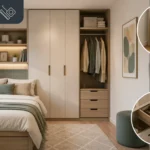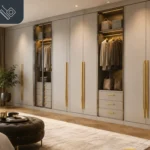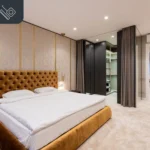
Your bedroom is hiding wasted space right now, and a fitted walk-in wardrobe has the potential to reclaim all of the wasted space
Most Hertfordshire homeowners don’t realize how much dead space sits behind a standard double wardrobe door. Awkward corners, unused alcoves, the back wall of a spare room, all of it can become a dressing space that actually works.
The global walk-in closet market is growing at a 5.9% CAGR through 2031, and UK homeowners are fueling that growth. If you’ve been searching for walk-in wardrobe ideas UK and wondering what works in a real Hertfordshire property, this is the practical answer.
Why Hertfordshire Homes Are Ideal for Walk-In Wardrobe Conversions
Hertfordshire has a genuinely varied housing stock. Victorian terraces in St Albans. 1930s semis in Watford. New-builds in Welwyn Garden City. Detached family homes in Harpenden and Radlett. Each property type throws up different opportunities and different challenges.
Period homes often have deep chimney alcoves on either side of a fireplace breast. These are typically 600 mm–700 mm deep, exactly the depth needed for a hanging rail. That’s the bones of a walk-in dressing area without sacrificing a full room. New-builds have the opposite problem: smaller rooms, lower ceilings, and limited floor space. Here, floor-to-ceiling fitted storage is the smartest move.
The walk-in wardrobe design that works brilliantly in a Harpenden detached house won’t suit a Hemel Hempstead mid-terrace. That’s why local knowledge matters as much as design inspiration.
5 Walk-In Wardrobe Ideas That Actually Work in UK Homes
1. The Spare Room Conversion
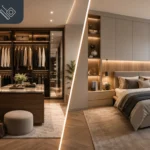
The most popular choice across Hertfordshire right now. If you have a boxy bedroom sitting empty or buried under bags and boxes, converting it into a dedicated dressing room changes your morning routine completely.
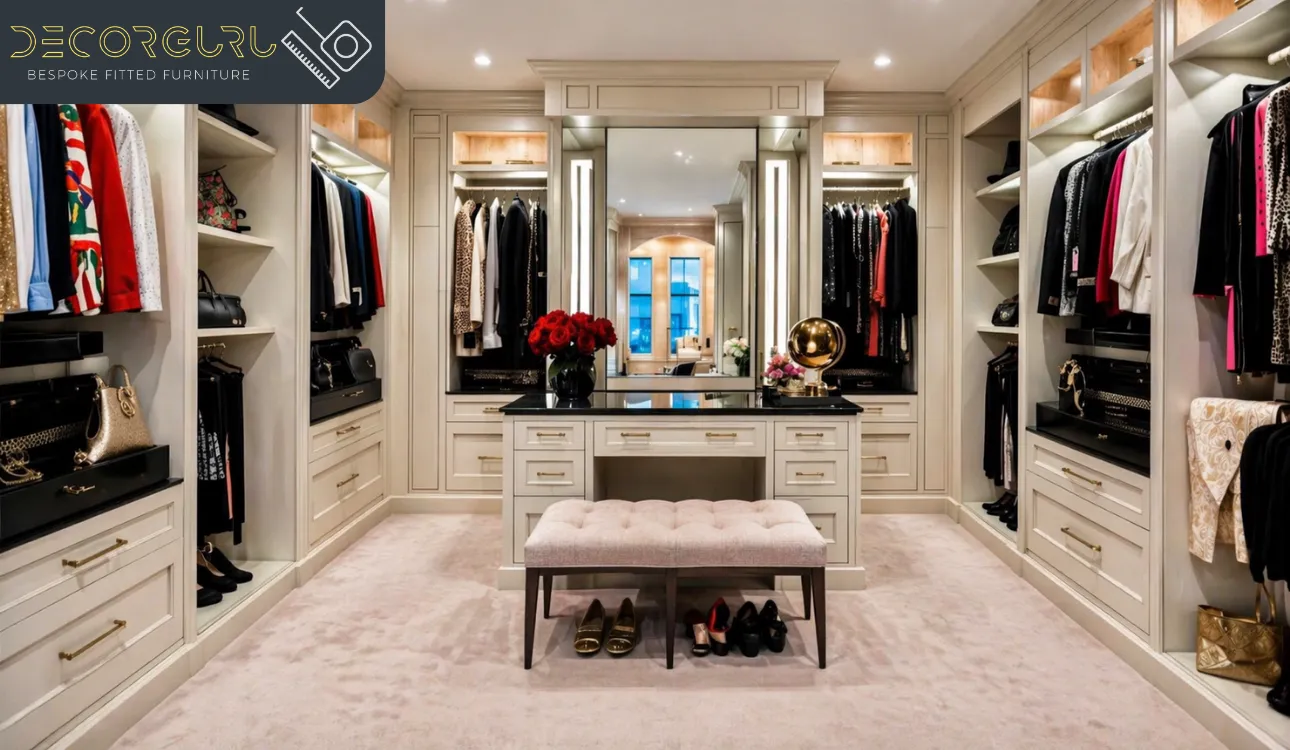
A well-fitted spare room walk-in typically includes the following:
- · Full-height hanging rails on two facing walls
- · A central island unit with deep drawers
- · Pull-out shoe racks along the base
- · A full-length mirror on the back wall or door
2. The Alcove Walk-In: Built for Period Homes
Victorian and Edwardian properties in Hitchin, Hertford, or St Albans are perfectly set up for this. Fit bespoke carcases into existing chimney alcoves, and you have hanging space, shelving, and drawer storage without losing a single room.
What works well here:
- Bespoke fitted carcases built to the exact depth and width of the alcove
- Integrated lighting on the underside of each shelf
- Fabric-lined pull-out drawers for a luxury feel
- Sliding door fronts to keep the visual clean when guests visit
This is one of the most cost-effectivewalk-in wardrobe storage ideas because you’re using existing architecture rather than building from scratch.
3. The L-Shaped Layout
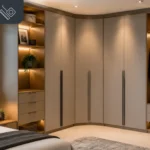
When one wall isn’t enough but a full room isn’t available, the L-shape solves it. One long wall handles full-height hanging dresses, coats, suits. The return section takes shelves for folded items, bags, and shoes. A rotating corner carousel prevents wasted space at the junction.
This walk-in wardrobe room idea works particularly well in
- Long wall: hanging for dresses, coats, suits
- Return section: shelves for folded items, bags, shoes
- Corner unit: a rotating carousel or pull-out corner shelf system
4. The Under-Eaves Walk-In for Loft Conversions
Loft conversions are hugely popular in Hertfordshire, and the eaves space left over is almost always wasted. With the right bespoke fitted solution, it becomes the most useful storage in the house.
Key Design Elements for Eaves Wardrobes:
- Sloped-ceiling carcases built at an angle to follow the roofline
- Low-height hanging rails for shirts, folded trousers, children’s clothes
- Drawer banks at the deepest point where standing height is limited
- Hinged panel doors that open flush to the wall
This is one area where off-the-shelf solutions genuinely fail. Only a bespoke, fitted approach handles the angles properly.
5. The Open Concept Dressing Room
Not everything needs a door. People are choosing open-concept dressing rooms, which show off clothes and accessories instead of hiding them. This is especially true for people who like the look of boutique hotels.
This style works with:
- Metal hanging rails with a powder-coated finish at different heights
- Shoe shelves with glass fronts so that shoes are visible but not dusty
- Open cubbies for accessories, hats, and bags
- Every item is illuminated by integrated task lighting at eye level.
In 2026, walk-in wardrobes and open-section designs are becoming more common in larger homes, and thoughtfully arranged storage creates a boutique-like experience at home.
Walk-In Wardrobe Design: 3 Questions to Answer Before You Start
1. How many people is this for?
Shared dressing rooms need clearly defined zones. His and hers sections work best when physically separated by different bays and different walls, not mixed.
2. What do you actually own?
Count before you design. How many long dresses? Suits? Pairs of shoes? The storage mix has to match your real wardrobe, not an idealistic one.
3. What’s your lighting situation?
A dark dressing room feels oppressive fast. If the room has no window, plan LED strip lighting inside every section, warm white at 2700K–3000K. Cool white makes getting dressed harder than it needs to be.
What Does a Walk-In Wardrobe Cost in Hertfordshire?
Here’s a realistic guide based on what local Hertfordshire fitted bedroom companies are charging in 2026:
| Project Type | Approximate Cost |
| Single alcove-fitted wardrobe | £1,500 – £3,500 |
| Spare room conversion (basic) | £3,500 – £6,000 |
| Spare room conversion (full bespoke) | £7,000 – £15,000+ |
| L-shaped master bedroom layout | £5,000 – £10,000 |
| Full island dressing room | £12,000 – £25,000+ |
Always get at least three local quotes before committing.
The difference between basic and premium isn’t just looks. It’s material quality and fitting precision. Quality suppliers use 18mm board or thicker; cheaper options use 15mm, which affects how the finished wardrobe feels and lasts. Don’t underestimate fitting costs either. A beautifully designed wardrobe with a poor installation still disappoints: misaligned doors, top gaps, and sticking drawers. Budget for both equally.
Finding the Right Fitted Wardrobe Company in Hertfordshire
Here’s the truth: the design can be perfect, and the result can still disappoint if the fitting is poor. Doors that don’t align. Gaps at the top. Drawers that stick. These are finishing problems, not design problems, and they come down to who does the work.
When choosing a local company, look for:
- Physical Showroom: So you can see and touch the materials before committing
- Testimonials from local Hertfordshire customers: Not just generic reviews
- Bespoke manufacturing: Units made to your exact measurements, not assembled from standard-size panels
- A clear process: Design visit, written quote, fitting schedule, aftercare
- A guarantee: On both the doors and the carcasses
Much of the best work in Hertfordshire comes through recommendations, and the strongest local companies handle everything from a single run of fitted wardrobes to dedicated dressing rooms, with the same team involved throughout, rather than subcontracting different stages.
3 Key Takeaways
• The best walk-in wardrobe ideas UK homeowners are choosing in 2026 are bespoke, not off-the-shelf. Hertfordshire properties with alcoves, eaves, period proportions, and uneven walls need solutions built to the space.
• Internal fittings determine daily functionality. Hanging zones, drawer inserts, and lighting matter as much as the cabinet doors you see from the outside.
• The quality of the fit cannot be compromised. Choose a local company with real Hertfordshire experience, a transparent process, and guarantees on both doors and carcasses.
Ready to turn dead bedroom space into a dressing room that genuinely works? Decor Guru Living designs and fits bespoke walk-in wardrobes across Hertfordshire: from first measurement to final install.
FAQs
1. Do I really have enough space for a walk-in wardrobe in a standard St Albans terrace?
You’d be surprised. Many Victorian terraces have “dead” space in the alcoves next to chimney breasts. By using a bespoke fitted solution, we can create a “walk-through” wardrobe where the storage is built into the alcoves, leaving a central walkway. You don’t necessarily need a whole spare room; you just need about 600mm of depth and a bit of clever planning.
2. How do I stop a walk-in wardrobe from feeling dark and claustrophobic?
Lighting is everything. Since many walk-ins (especially under-eaves or alcove versions) don’t have large windows, we recommend integrated LED strip lighting. Use warm white LEDs (around 3000K) inside the carcasses. Also, using mirrors on the back panels or doors can bounce light around and make a small space feel twice the size.
3. Should I go for “open” shelving or put doors on everything?
It depends on how tidy you are! Open shelving looks like a high-end boutique and makes grabbing clothes easy. However, if you’re worried about dust or a bit of “wardrobe chaos,” sliding glass doors or sleek handle-less panels are a better bet. In Hertfordshire’s older, dustier period properties, doors are usually the more practical choice.
4. What is the difference between 15mm and 18mm boards?
It sounds like a small difference, but it’s huge for longevity. Cheaper, mass-produced wardrobes often use 15mm MDF, which can sag over time under the weight of heavy coats. We use 18mm high-density boards for the carcasses because they provide the structural integrity needed to keep your drawers running smoothly for decades, not just months.
5. Is an island unit actually practical or just for show?
Island units are brilliant if you have at least 900mm of clearance on all sides. They provide excellent storage for “smalls” like watches, jewelry, and ties. If your room is narrower, we usually recommend a peninsula or extra deep wall drawers instead to keep the floor space clear and easy to move around in.