You open the wardrobe door, and three coats fall out. Shoes are stacked on the floor. Somewhere behind the winter coats and last summer’s sandals have gone missing.
This is the issue most homeowners start looking into a walk-in wardrobe for. A 2021 Spaceslide study of 2,515 UK properties found walk-in wardrobes added £103,798 to sale price on average. That’s a number worth pausing on.
But a walk-in wardrobe isn’t the right call for every home. Custom fitted bedroom furniture can solve the same clutter problem in half the space, and most comparison guides skip that detail. This will let you know each detail related to it.
In Oxford, where period terraces rarely spare a room, most projects go into wall-to-wall wardrobes instead. In newer homes with a genuine box room, a walk-in wardrobe often makes more sense. The right answer changes with the property, not the trend.
Why This Comparison Matters Right Now
UK bedrooms keep shrinking. Second bedrooms in new-build homes are now on average under 10 square meters, and older terraces rarely offer much more.
A freestanding wardrobe, a chest of drawers, and a bed packed into that space leave no space to move in the room. A cluttered bedroom is one of the first things any buyer notices.
Fitted bedrooms solve this by using every wall, alcove, and awkward corner. A walk-in wardrobe takes it further, turning a spare room into dedicated storage with room to stand in.
The right choice depends on what you’ve got to work with, not what looks best on a mood board.
Estate agents notice this too. A well-fitted bedroom photographs better, and viewings tend to run smoother. That’s true whether you’re selling next year or in a decade.
Signs You’ve Outgrown Your Current Wardrobe
| Sign | What It Means |
| The clothes rail is bent or sagging | You’ve outpaced its weight limit |
| Shoes and bags live on the floor | There’s no dedicated storage zone |
| You have a spare room you barely use | You’ve got the footprint for a walk-in wardrobe |
| The wardrobe doors won’t fully close | Your storage no longer matches your wardrobe |
| Getting dressed takes longer than it should | Poor layout, not lack of space, is the real issue |
Walk-In Wardrobe vs Fitted Bedroom Furniture
Both routes solve the same problem in different ways. Neither is automatically better, since the right pick depends on your room, your budget, and how long you’re staying put. Here’s how each one actually plays out.
Walk-In Wardrobe
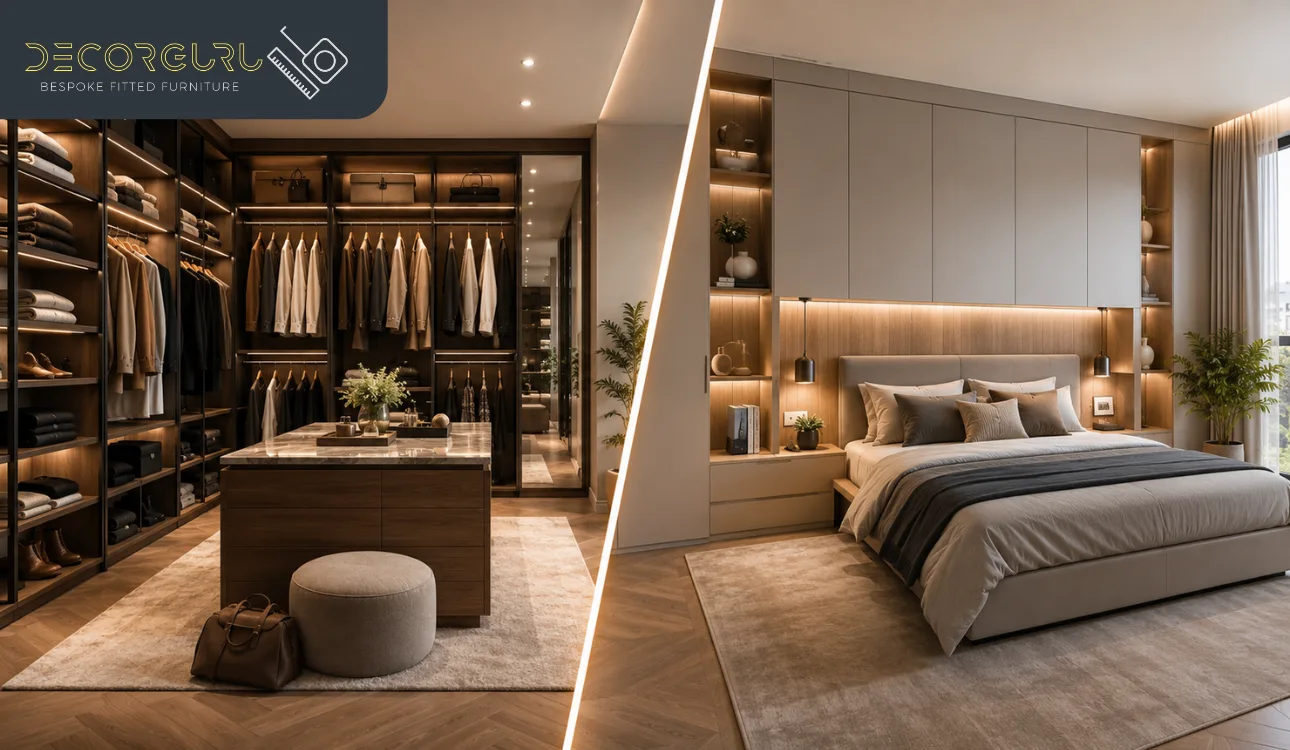
A walk-in wardrobe takes over a small room or a large alcove and turns it into a dedicated dressing space.
- 360° access to everything you own, no digging through doors
- Room for a full-length mirror, seating, or an island unit
- Keeps clothing storage fully separate from the sleeping space
- Often the strongest single upgrade for resale value
Fitted Wardrobes (Sliding or Hinged)
Sliding door wardrobes and hinged door wardrobes fit directly against a wall or into an alcove.
- Cost-effective compared to converting a whole room
- Sliding doors save floor space in smaller rooms
- Hinged doors give full access to every shelf and rail
- Made-to-measure wardrobes builds work around sloped ceilings and boxed pipework also.
Made-to-Measure Combination Layouts
Some homes don’t need to pick just one. A custom-fitted wardrobe along one wall, paired with an open dressing corner, adds hanging space without losing the room.
- Blends storage capacity with a smaller footprint
- Suits box rooms that are too small for a full walk-in layout
- Lets you phase the build if budget is tight this year
- Keeps the option open to extend later
A Walk-In Wardrobe Must Work With Your Storage Accessories
A walk-in wardrobe without the right internal fittings is just an empty room with rails in it. Lighting, drawer inserts, and hardware finishes decide whether it actually functions day to day.
- Integrated LED lighting stops you digging around in shadow
- Soft-close drawers and pull-out racks protect delicate fabrics
- Matching handles and hardware tie the space to the rest of your bedroom
- Shoe and accessory shelving stops floor clutter from creeping back in
Skip this step and you’ll end up with a beautiful room that still doesn’t solve the original problem.
Benefits and Outcomes
Both a walk-in wardrobe and a well-planned fitted bedroom pay off well beyond the install date. Here’s what homeowners actually notice once the work is done.
- Faster mornings, since everything has one home
- Higher perceived value on property listings and viewings
- Less wasted floor space in the bedroom itself
- A cleaner, calmer room that’s easier to keep tidy
- Storage that grows with you, rather than a wardrobe you outgrow in three years
- Fewer arguments over shared space, if you’re splitting a wardrobe with a partner
- One less thing to sort before a house move, since fitted units stay put
How to Choose the Right Fit for Your Home
- Measure the room, not just the wall. Walk-in wardrobes need clearance to move
- Check your budget against both options before falling for photos online
- Think about the resale timeline. A walk-in wardrobe pays off best if you’re staying five-plus years
- Ask whether a spare room is genuinely spare, or secretly needed for guests
- Get a measured 3D design before deciding. Guesswork is where most projects go over budget
The Space, Style, Structure, Spend Framework
Every fitted furniture decision worth making comes down to four questions, in this order.
- Space: What’s the actual usable footprint, measured, not estimated?
- Style: Does the finish match the rest of your bedroom and your home?
- Structure: Can the room take a full conversion, or does it need fitted units instead?
- Spend: What’s the realistic budget, including hardware and lighting, not just carcasses?
Answer those in order, and the walk-in-wardrobe-versus-fitted-bedroom question mostly answers itself.
Walk-In Wardrobe vs Fitted Bedroom: Cost and Installation Timeline
Most comparison articles stop at style. Cost and timeline are usually what actually decide the project, so here’s both side by side.
| Feature | Walk-In Wardrobe | Fitted Bedroom Furniture |
| Typical UK cost | £5,500 – £15,000+ | £1,100 – £4,600 |
| Installation time | 2–4 weeks | 1–2 weeks |
| Minimum room size needed | Small bedroom or box room | Works in any bedroom |
| Access to clothing | 360°, walk-in access | Door-dependent access |
| Average property value add | Up to £103,798 | Up to £78,632 |
| Best suited to | Homes with a spare room or large bedroom | Smaller bedrooms, tighter budgets |
Not Sure Which One Fits Your Budget?
Try our free wardrobe cost calculator to get a realistic figure before you book a visit. Use the Wardrobe Cost Calculator
What Most Walk-In Wardrobe Guides Don’t Tell You
- A walk-in wardrobe under 4 square metres often feels tighter than a good fitted wall run, no matter how it’s marketed
- North-facing dressing rooms need proper lighting design, or the space reads dark in every photo, viewing included
- Converting a box room removes it as a “bedroom” on paper, which can affect how estate agents list the property
- Sliding doors need a clear swing zone even though they don’t open outward, so measure the full track length first
- Hardware and lighting typically add 10–15% to a walk-in wardrobe budget that homeowners rarely price in upfront
Frequently Asked Questions
Is a walk-in wardrobe worth it in the UK?
Yes, for most homes with the spare footprint. A 2021 Spaceslide study found they can add up to £103,798 to a property’s value.
How much does a walk-in wardrobe cost in the UK?
Expect £5,500 to £15,000 or more, depending on size and finish. A fitted wall unit costs considerably less, from around £1,100.
Can a small bedroom become a walk-in wardrobe?
Yes, if it’s at least 4 square meters with room to move. Anything smaller usually suits fitted wardrobes better, since access gets cramped fast.
What’s the difference between a fitted wardrobe and a walk-in wardrobe?
A fitted wardrobe sits against a wall inside your bedroom. A walk-in wardrobe uses its own dedicated room, with 360° access.
How long does a walk-in wardrobe installation take?
Most projects take two to four weeks from final measurement to finished install. Complex layouts with bespoke lighting can run longer.
Which One Actually Fits Your Home?
Neither option is objectively better. The right one is whichever matches your room, your budget, and how long you plan to stay.
- A walk-in wardrobe delivers the strongest storage and resale upgrade, but only where the room genuinely allows it
- Fitted bedroom furniture solves the same clutter problem at a lower cost and with a shorter install time
- The right pick comes down to space, style, structure, and spend, in that order
If you’re weighing a walk-in wardrobe against fitted bedroom furniture, get a free measured design visit before you decide anything. Book your consultation with Decor Guru Living today.