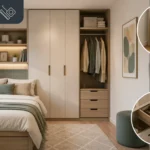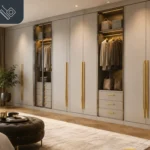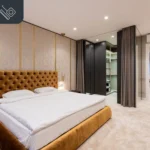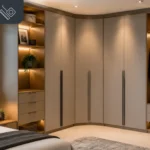
Your bedroom is full of clothes, and the door no longer closes properly, yet you still can’t find what to wear. Sound familiar? You are not alone. Across Hertfordshire, from St. Albans to Watford and Harpenden to Berkhamsted, everyone has the same story. Today, we will together figure out the solution to this problem.
Walk-in wardrobes are not a luxury reserved for mansions anymore. The global walk-in wardrobe market was worth $14.97 billion in 2024 and is expected to grow to $22.8 billion by 2032. That growth is happening for a reason: people are tired of chaotic storage.
If you have been searching for walk-in wardrobe ideas UK that actually work for real homes, not just staged showrooms, you are in the right place. This guide covers what works, what does not, and how Hertfordshire homes in 2026 are making it happen. So, whether you are planning for the change or will plan the change, this blog is for all.
Why Hertfordshire Homes Are Perfect for a Walk-In Wardrobe
21% of British homeowners plan to invest in home improvements in 2025–26, with storage and bedroom upgrades among the top priorities.
Hertfordshire has a particular mix of housing stock, like 1930s semis in Hatfield, Victorian terraces in St. Albans, or newer-build four-bedrooms dotted across Welwyn Garden City and Stevenage. Each of these comes with its own set of quirks and its own set of unused spaces.
Hertfordshire planning rules allow for changes to the inside of a house without any special permission. This makes it easier for homeowners to change these spaces than they might think.
Now, Hertfordshire homeowners are working on it due to the property values. A well-designed dressing room adds genuine appeal when it comes to selling.
Local Tip
If you are in a conservation area in Hertfordshire, parts of St. Albans, Tring, or Hertford, check with your local council before making any external changes. Internal reconfigurations, however, almost always fall under permitted development.
Walk-In Wardrobe Design Ideas: 7 Layouts That Actually Work
Before picking finishes and handles, you need a layout that suits your space. Here are the seven walk-in wardrobe design ideas that Decor Guru Living uses most frequently in Hertfordshire homes and why each one works.
1. The L-Shaped Layout
Perfect for corner bedrooms and box rooms. Two walls of storage meet at a right angle, maximizing capacity without feeling cramped. Great for couples: one side each. Works well in rooms from 7 ft × 8 ft upwards.
2. The U-Shaped Layout
Three walls of storage with a central walkway. This is the most storage-dense option and works brilliantly in converted bedrooms or large alcoves. You need at least 9 ft × 9 ft to make the central aisle comfortable.
3. The Straight-Run (Galley) Layout
One wall of full-height cabinetry. Ideal for narrow spaces, a converted landing, a hallway alcove, or a slimline spare room. Simple, clean, and incredibly effective when planned well.
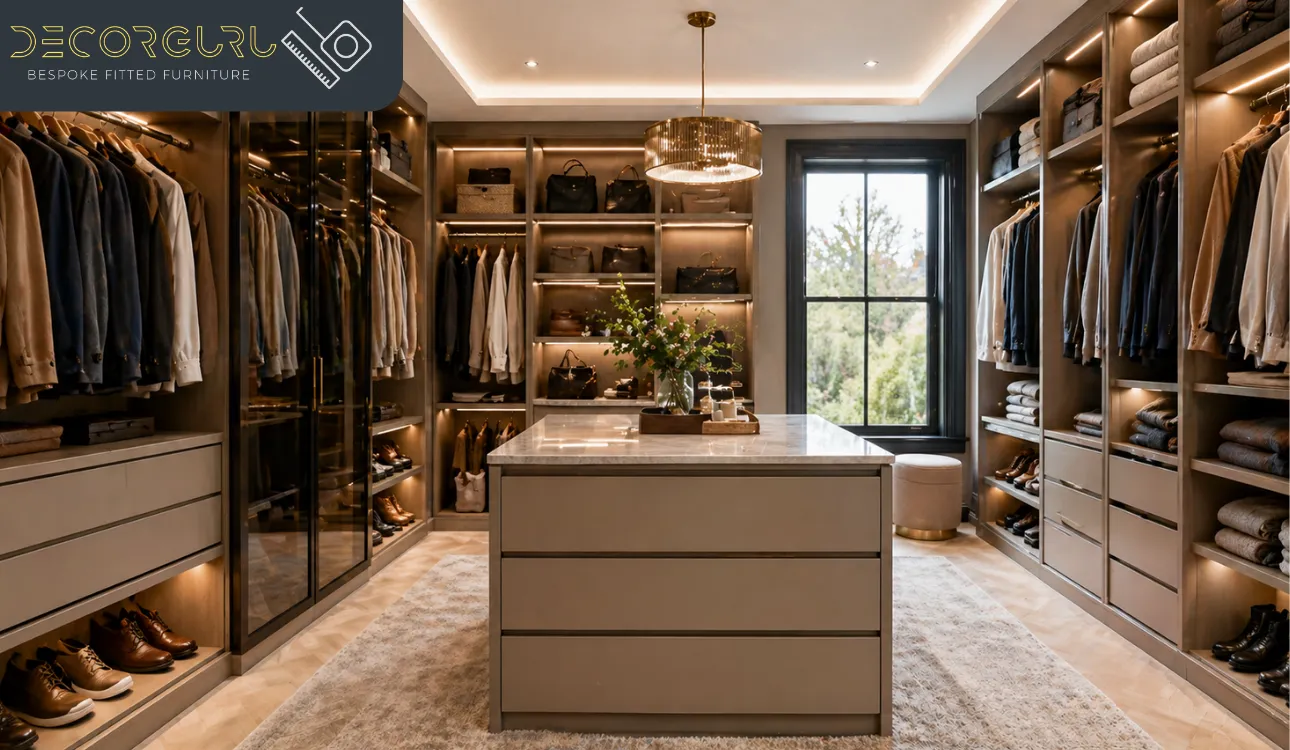
4. The Island Layout
A central island unit, often with drawers and a display surface surrounded by perimeter cabinetry. This is the boutique-feel option. You need a room of at least 12 ft × 12 ft to pull it off without it feeling claustrophobic.
5. The Alcove Conversion
No spare room? No problem. Many Hertfordshire bedrooms have deep alcoves on either side of a chimney breast. These are ideal for building a walk-in-style wardrobe with a curtain or barn-door access. Cheaper than a full room conversion and surprisingly spacious.
6. The Loft Dressing Room
Hertfordshire’s Victorian stock often has loft space that goes completely unused. A partial loft conversion, not a full bedroom, just a dressing area with Velux windows and built-in eaves storage, can create a proper walk-in without losing a bedroom.
7. The Walk-Through Wardrobe
A dressing room that connects the bedroom to the en suite. Storage lines both sides of the walkway. Highly functional, feels luxurious, and uses a corridor or landing space that would otherwise be dead space. Increasingly popular in Hertfordshire are new builds.
Walk-In Wardrobe Storage Ideas: What to Actually Put Inside
This is where most designs go wrong. People plan the room but not the interior. The result? A beautiful-looking wardrobe that still does not work for real life.
Here is how to think about your walk-in wardrobe storage ideas before you commit to a design.
Step 1: Do a wardrobe audit
- Count what you actually own.
- How many items are on hangers?
- How many folded?
- How many pairs of shoes?
- How much is hanging long (dresses, suits) versus short (shirts, jackets)?
Step 2: Zone by category
Think in zones, not just shelves. A well-designed walk-in has the following:
- A long-hang section (at least 60–70 inches clearance) for dresses, coats, and suits
- A double-hang section for shirts, jackets, and folded trousers
- Open shelving for shoes (angled shelves are best; you can see the style at a glance)
- Deep drawers for knitwear, gym wear, and delicates
- A dedicated accessories tray or pull-out drawer for jewellery, watches, and belts
- Overhead shelf for seasonal storage and luggage
Step 3: Light it properly
The single most common mistake in UK walk-in wardrobes is poor lighting. A dark corner means you cannot see the colour of what you are grabbing. LED strip lighting inside the wardrobe and ideally a natural light source make the space genuinely usable, not just Instagram-worthy.
“A wardrobe that does not work for your daily routine is just expensive clutter with doors on it.”
The Hertfordshire Lifestyle Factor
Hertfordshire residents commute. They need office wear, smart-casual wear, weekend wear, and gym kits, often in the same week. Your walk-in needs to handle all of it without forcing you to dig. If you cannot get dressed in under four minutes, the design has not done its job.
Walk-In Wardrobe Design: Layout Comparison at a Glance
Not sure which layout suits your home? This table lays out the key differences across the most common walk-in wardrobe design options.
| Layout | Min. Space Needed | Storage Capacity | Best For | Approx. Cost (Hertfordshire) |
| L-Shaped | 7ft × 8ft | Medium–High | Couples, box rooms | £3,500 – £7,000 |
| U-Shaped | 9ft × 9ft | Very High | Converted bedrooms | £5,500 – £12,000 |
| Straight-Run | 6ft × 8ft | Medium | Narrow spaces, landings | £2,000 – £5,000 |
| Island | 12ft × 12ft | Very High | Large master suites | £8,000 – £18,000+ |
| Alcove Conversion | 5ft × 6ft | Low–Medium | Victorian terraces, alcoves | £1,500 – £4,000 |
| Walk-Through | Corridor 3ft+ wide | Medium | En-suite connections | £3,000 – £8,000 |
*Costs are estimates for Hertfordshire and can vary based on specification, materials, and whether the room requires structural changes. Always get a survey before budgeting.
Walk-In Wardrobe Room Ideas: Making the Space Feel Right
Storage is functional. A dressing room is an experience. The difference between the two is how the space makes you feel when you walk into it, and that comes down to details.
Here are the walk-in wardrobe room ideas that Hertfordshire clients at Decor Guru Living consistently respond most positively to:
Full-Height Mirrored Doors
They serve a practical purpose: you can see your full outfit and also visually double the size of the room. Matt black or brushed brass frames are popular in 2026 and feel far more current than older chrome finishes.
A Dressing Table Built In
This keeps the bedroom clear and creates a dedicated beauty space. A lit mirror above it completes the look. This is consistently one of the most-requested features we see in Hertfordshire commuter homes.
Warm Tones and Natural Materials
In 2026, Hertfordshire homes are gravitating toward warm oak veneers, sage green painted cabinetry, and linen-texture inserts. These feel calming and personal, not like a storage unit.
Open Shelving for Display
Not everything needs to be behind a door. A row of open shelves for handbags, perfume bottles, and a few books displayed intentionally makes the space feel curated rather than clinical.
Common Mistakes to Avoid in a Hertfordshire Walk-In Project
These are the problems that come up repeatedly and that a good designer catches before work starts.
- Underestimating the hanging rail length
- Forgetting ventilation
- Choosing the wrong door type
- Ignoring the floor
- Skipping a site survey
A Real Hertfordshire Example: St Albans Box Room Transformation
One of the most common briefs Decor Guru Living receives goes something like this: a four-bedroom 1970s detached in St. Albans; the fourth bedroom is 8 ft × 7 ft, and nobody uses it except for storing old duvets.
The solution in this case was a U-shaped walk-in with full-height cabinetry on three walls, a central dressing table, and two Velux windows replaced with a larger casement to bring in more natural light. The cabinetry was in a painted sage green with brushed brass handles. The floor was laid in warm, natural oak LVT. The room went from being the house’s biggest wasted space to the feature that every viewer commented on during the subsequent sale.
Total project time: 6 working days. The room did not require planning permission. The transformation took one week and added tangible value to the property at the point of sale, something local estate agents in St. Albans confirmed directly.
The dressing room was the first thing every viewer mentioned. We had three offers in the first week: St. Albans client, 2025
Three Things to Take Away Before You Start
- Your 2026 Walk-In Wardrobe Checklist
- Space first, aesthetics second. Know your dimensions, door swing clearances, and ceiling height before you fall in love with a finish.
- Design around how you actually dress, not how you think you should dress. A working wardrobe beats a beautiful one every time.
- Lighting and ventilation are not optional. They are the difference between a room you use every day and one you avoid.
The best walk-in wardrobe ideas UK are not complicated. They are specific to your home, your habits, and your budget. Hertfordshire homes have the space; it is just a question of knowing what to do with it.
At Decor Guru Living, we cover Hertfordshire from initial design consultation right through to installation. We do not give you a catalogue and leave you to figure it out; we design around your actual space and your actual life.
Ready to Reclaim Your Space?
Book a free design consultation with Decor Guru Living. We survey your space, draw up a layout, and give you a clear, no-obligation quote, all before any work begins.
FAQs
1. What is the smallest space needed for a walk-in wardrobe?
An alcove conversion works from just 5 ft × 6 ft. A straight-run layout needs around 6 ft × 8 ft. A U-shaped layout requires at least 9 ft × 9 ft for an easy walkway.
2. Which layout suits couples best?
The L-shaped layout works well, with one side per person. A U-shape is ideal for larger spaces, offering maximum storage that can be clearly zoned between two people.
3. Can I have a walk-in wardrobe without a spare room?
Yes. Alcove conversions and walk-through wardrobes both work without sacrificing a bedroom. Victorian Hertfordshire homes often have alcoves ideal for exactly this purpose.
4. How should I plan the interior storage?
Audit what you own first: count hanging items, shoes, and folded clothes. Then zone accordingly: long-hang, double-hang, shoe shelving, deep drawers, accessory trays, and overhead seasonal storage.
5. What lighting works best?
LED strip lighting inside the wardrobe, downlights overhead, and a natural light source where possible. Poor lighting is the most common mistake; it makes colour-matching clothes genuinely difficult.