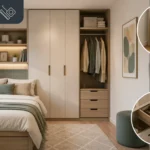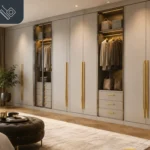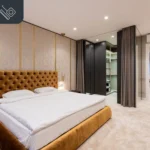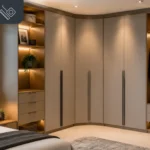
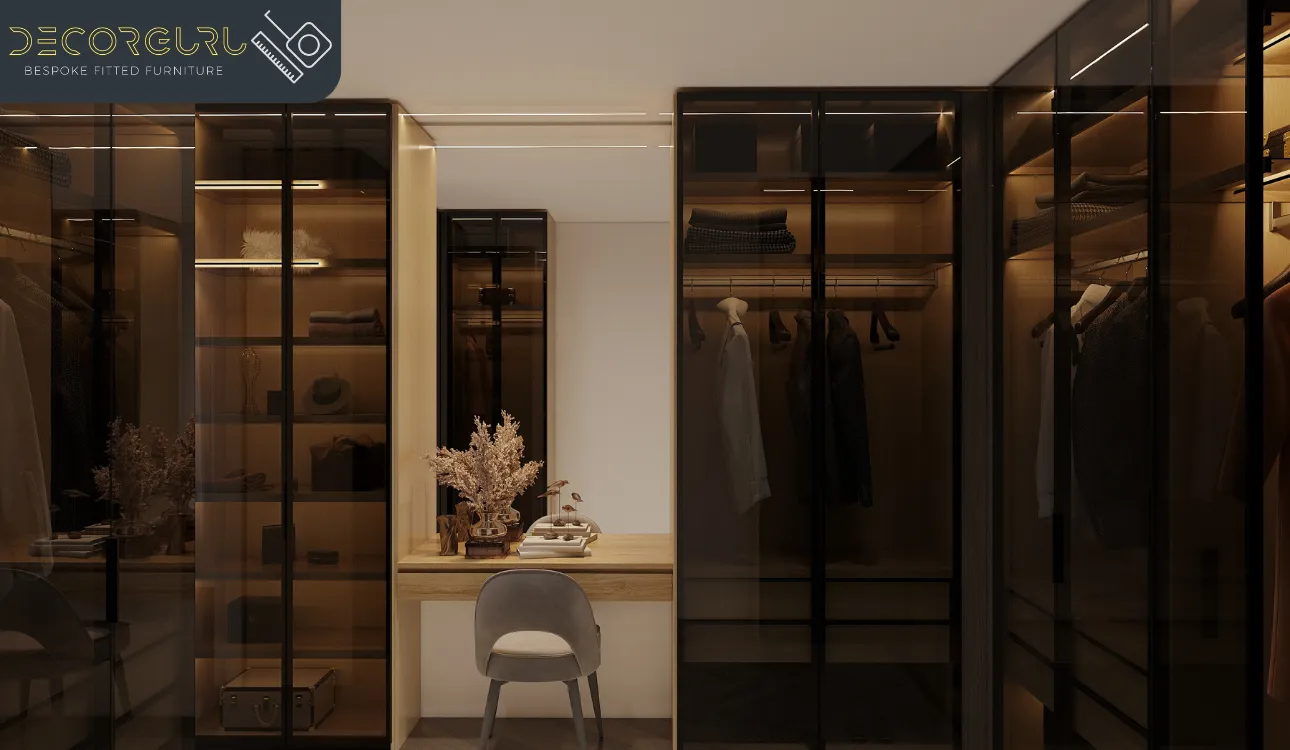
This guide explains the three core fittings: shelving, hanging rails, and carcass units that make up a walk-in wardrobe and how each one affects the finished result. You’ll learn which configurations suit Aylesbury homes, what to expect from the fitting process, and how to choose between modular and fully bespoke options.
Most people spend more time choosing their kitchen than they do planning their wardrobe and then wonder why getting dressed every morning feels like a battle.
The fittings inside a walk-in wardrobe are where function either succeeds or fails. The rail is at the wrong height. Shelves are too close together. Units that eat floor space instead of earning it. These aren’t minor inconveniences. They’re problems you live with every single day.
Here, we will break down every key fitting decision: shelves, rails, and carcass units, so you can walk into a conversation with any fitter in Aylesbury knowing exactly what you want and why.
Thinking about a bespoke wardrobe? See our walk-in wardrobe service page for design examples and pricing guides.
What Walk-In Wardrobe Fittings Does Every Layout Need?
Walk-in wardrobe fittings fall into three non-negotiable categories: hanging rails, shelving, and structural units, and getting the balance right between them determines how well the space actually works.
Every wardrobe you’ll see in a Wendover barn conversion, a Buckingham townhouse, or a new-build in Aylesbury Vale uses these same three elements. The difference between a good result and a great one is in the configuration.
Hanging Rails
Rails are the most used fitting in any wardrobe. Position a single rail at 1,800 mm from the floor for full-length garments, like dresses, coats, and formal trousers. Drop it to around 1,000 mm, and you can run a double-hanging configuration below, which effectively doubles your short-hang capacity in the same vertical space.
A double-hanging rail system suits jackets, folded trousers, and short dresses. In a standard 2,400 mm ceiling height, which is typical across most semi-detached and detached homes around Aylesbury, you’ll get a comfortable upper rail at 1,800 mm and a lower rail at 900 mm, leaving floor space below the lower rail for a shoe rack or drawer unit.
Shelving Systems
Shelf pitch: The vertical gap between each shelf is the most commonly underestimated detail in wardrobe design. Folded jumpers and knitwear need at least 350mm of clearance. Shoes need 180–200mm. Bags and accessories need 300–400 mm, depending on size.
Fixed shelving is rigid, economical, and stable. Adjustable shelving on a track system costs slightly more but allows the layout to evolve as your wardrobe contents change. For most homeowners in Aylesbury, especially those making a long-term investment in bespoke wardrobes, adjustable systems are the better choice.
Carcass Units
A carcass unit is the structural box that houses drawers, pull-out shoe racks, or fixed shelving. In bespoke joinery, these are built from moisture-resistant MDF or birch ply and finished with an alkyd or water-based lacquer to match the overall wardrobe finish.
Carcass depth is critical. Standard bedroom wardrobe depth is 580–600 mm, enough for hanging garments on the rail without the shoulders pressing against the back panel. Shallower carcasses (around 450mm) work well for shelf-only sections or display areas.
Choosing the Right Walk-In Wardrobe Units for Your Space
Walk-in wardrobe units come in two forms: modular and fully bespoke, and the choice between them affects cost, quality, and how well the finished result actually fits your room.
In 2026, a growing number of homeowners across Buckinghamshire are moving away from flat-pack modular systems and towards made-to-measure fitted furniture. The reasons are practical: older Aylesbury properties rarely have perfectly square rooms, and modular units leave visible gaps at walls, ceilings, and floor edges that a bespoke carcass eliminates.
| Feature | Modular Units | Bespoke Units |
| Fitting to irregular walls | Limited gaps are common | Exact fit to any wall shape |
| Ceiling height flexibility | Standard heights only | Floor-to-ceiling where required |
| Internal layout | Fixed by the manufacturer | Fully customised to your clothes |
| Finish options | Limited colour range | Any RAL colour, grain, or lacquer |
| Lead time | 1–2 weeks | 4–8 weeks typically |
| Approx. cost (per linear metre) | £300–£600 | £800–£2,000+ |
A modular fit-out for a 2.5m × 3m walk-in room in a four-bedroom Aylesbury detached home could cost between £4,000 and £7,000 fully installed. A bespoke version from a local specialist typically sits between £9,000 and £16,000, depending on the specification.
According to the British Woodworking Federation (BWF), demand for fitted bedroom furniture in the UK grew significantly between 2022 and 2024, with bespoke joinery accounting for an increasing share of the total market as homeowners prioritised quality and durability over lower upfront costs.
Ready to plan your wardrobe layout? Book your free design consultation in Aylesbury with no pressure and no obligation.
Call us or complete the enquiry form here to get started.
Our Aylesbury Customers Ask Us
1. Can you fit a walk-in wardrobe into a box room?
Yes. In a room that is at least 1.8m × 1.8m. We’ve completed successful walk-in conversions in box rooms across Aylesbury and Wendover. The key is a layout that maximizes wall space without compromising the central circulation corridor.
2. How long does a bespoke wardrobe fitting take?
Most single-room bespoke walk-in wardrobe installations are completed in two to three days. Survey, design sign-off, and manufacture typically take four to six weeks before installation begins.
3. Do you use MDF or solid wood?
We use moisture-resistant MDF for carcass construction. It’s dimensionally stable, takes a lacquer finish extremely well, and is the industry standard for quality fitted furniture. Solid wood fronts and moldings are available as an upgrade.
How to Plan Shelving for a Luxury Walk-In Wardrobe
More than any other single fitting, shelving makes up a walk-in wardrobe’s usable capacity, and it’s the component that is most frequently poorly designed.
A shelf that’s too deep wastes space and makes items at the back inaccessible. A shelf with the wrong pitch forces you to stack items awkwardly. A shelf without adequate support sags within a year. These are solvable problems, but only if you plan properly before anything is built.
Shelf Depth by Zone
A practical wardrobe uses different shelf depths in different zones. Hanging sections need no shelf at all, just the rail and clear space above. Folded clothing sections work best at 550–580mm depth to match the carcass. Shoe shelving performs better at a shallower 300–350mm, which keeps pairs visible without the shelf dominating the wall.
Since 2025, the most requested addition to bespoke wardrobe shelving in the Aylesbury area has been:
- A dedicated bag shelf
- A single deep shelf at eye height,
- Backlit with LED interior strip lighting
- A boutique finish to the dressing room.
Pull-Out and Specialist Fittings
A pull-out trouser rack mounts inside a carcass unit and holds 20–30 pairs of folded trousers at a consistent height, eliminating the creasing that happens when trousers are draped over a standard rail. Soft-close drawer boxes underneath the hanging section make the most of the vertical dead space below a short-hang rail.
A full-height mirror panel, either as a door face or a fixed internal panel, makes any walk-in feel larger and functions as a genuine dressing aid. In rooms under 3m², a mirrored back panel is one of the most effective visual tricks available.
Sizing and Space Planning for Walk-In Wardrobes in Aylesbury Homes
The minimum workable size for a walk-in wardrobe is 1.8 m × 1.8 m, small enough to fit in a box room in many Aylesbury semi-detached and detached properties and large enough to include a full run of hanging and shelving on two walls with a central circulation corridor of 900 mm.
Older houses in the Wendover and Thame areas often feature irregular room shapes, chimney breast projections, sloped ceilings, or awkward alcoves. These aren’t problems for bespoke joinery. They’re opportunities. A built-in carcass can be profiled precisely to a sloped ceiling or wrap around a chimney breast in a way no off-the-shelf unit can match.
Planning permission is not normally required for internal wardrobe fitting work in the UK. According to the UK government’s Planning Portal, internal alterations to a dwelling that do not affect the external appearance or structure are generally permitted development. Always confirm with your local authority if you’re unsure, particularly for listed buildings or properties in conservation areas, both of which exist in the Aylesbury district.
Circulation Space
Allow a minimum 900mm central corridor. This is the dimension the building regulations guidance cites as a minimum accessible circulation width, and it holds in a wardrobe context; anything narrower feels cramped when you’re dressing and makes it harder to see garments on both sides simultaneously.
The Bottom Line
Three things determine whether a walk-in wardrobe actually works: rails positioned for the garments you own, shelving pitched correctly for how you fold and store; and carcass units built to fit the room rather than the other way around. Get those three right and the space transforms from a frustrating box into the most functional room in the house.
For Aylesbury homeowners investing in this kind of project in 2026, the choice between modular and bespoke is clearer than ever. Modularity is quick and accessible. Bespoke gives you a result that fits your home, your life, and your budget precisely and outlasts anything flat-packed by decades. Luxury walk-in wardrobe fitters in Aylesbury can survey, design, and install a wardrobe that fits your exact specifications from start to finish.
Frequently Asked Questions
What shelves are best for a walk-in wardrobe?
Adjustable shelves on a vertical track system are the most versatile choice. They allow shelf pitch to be reconfigured as your storage needs change. Fixed shelving is cheaper and stable but offers no flexibility once installed.
How many rails does a walk-in wardrobe need?
It depends entirely on your clothes. A practical starting point is one full-length rail for dresses and coats and one double-hang section for shorter garments. Most walk-in wardrobes for two people need a minimum of three to four rail sections in total.
How much does a walk-in wardrobe cost in the UK?
A modular walk-in wardrobe in the UK typically costs £4,000–£8,000 fully installed. A bespoke fitted wardrobe starts around £9,000 and can reach £20,000+ for large, highly specified rooms. Location, materials, and internal fittings all affect the final figure.
What is the minimum size for a walk-in wardrobe?
1.8m × 1.8m is the practical minimum. This allows for fitted units on two walls with a 900 mm central corridor, enough to dress comfortably and access all sections without the space feeling like a cupboard.
Are bespoke wardrobes worth it?
For most homeowners, making a long-term investment is a yes. Bespoke wardrobes fit your exact room dimensions, your specific wardrobe contents, and your chosen finish, and they add measurable value to a property in a way that flat-pack furniture does not.
Book your free wardrobe design consultation in Aylesbury today.